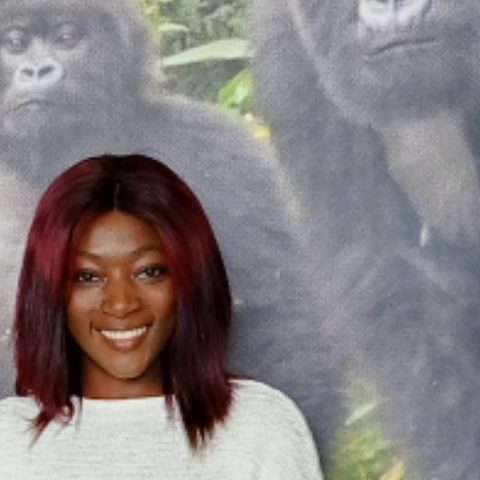
Trainees at an Ape Institute workshop

Home  /  Fellowship & Training  /  Training workshops

Training
workshops

Analyse. Interpret. Write. Publish.

Between 2022 and 2025 the Institute and the IUCN SSC Primate Specialist Group Section on Great Apes ran five training workshops for early-career scientists and conservation practitioners from great ape range countries — building the skills needed to turn field data into published science.

Training Programme

Turning field data into published science

Between November 2022 and October 2025, the IUCN SSC Primate Specialist Group — Section on Great Apes (PSG-SGA) and the APES team organised five training sessions to strengthen the capacity of young scientists and conservation practitioners from great ape range countries in data analysis, paper writing, and publishing in scientific journals.

Twenty-four trainees from twelve countries took part, together accounting for seventy instances of participation across the five workshops. Most participants returned for more than one session, so the programme built skills cumulatively rather than through one-off events — and several of the resulting collaborations have since led to peer-reviewed publications.

24

Trainees

5

Workshops

12

Nationalities

70

Participations

The Workshops

Five sessions across West and East Africa

The programme opened with a two-part course on processing, analysing, and interpreting wildlife survey data, held in Côte d'Ivoire and Rwanda. The later sessions in Rwanda were smaller and project-based, which allowed for closer interaction among participants within their project groups and more individual supervision on their own datasets and manuscripts.

# Session Location Date Trainees
1 Processing, analysing, and interpreting wildlife survey data — Part 1 Abidjan, Côte d'Ivoire November 2022 19
2 Processing, analysing, and interpreting wildlife survey data — Part 2 Kinigi, Rwanda April 2023 18
3 Scientific analyses of wildlife survey data, interpretation, and paper writing for young academics and conservation practitioners Kinigi, Rwanda July 2024 10
4 Scientific analyses of wildlife survey data, interpretation, and paper writing for young academics and conservation practitioners Kinigi, Rwanda November 2024 12
5 Scientific analyses of wildlife survey data, interpretation, and paper writing for young academics and conservation practitioners Kinigi, Rwanda October 2025 11

Who Took Part

Twenty-four trainees from twelve countries

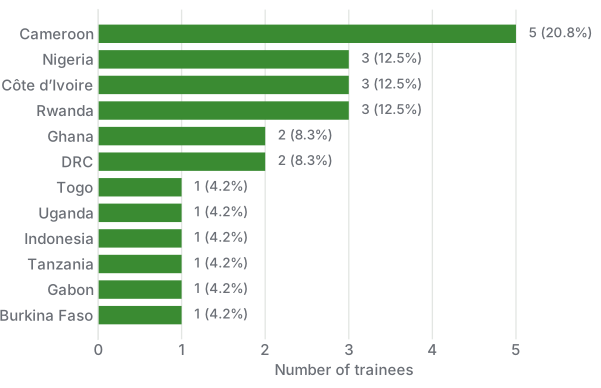
Cameroon contributed the largest group of trainees, followed by Nigeria, Côte d'Ivoire, and Rwanda. Participation extended beyond Africa: one trainee joined from Indonesia, connecting the African and Asian ape conservation communities.

Horizontal bar chart of trainees by nationality: Cameroon 5, Nigeria 3, Côte d'Ivoire 3, Rwanda 3, Ghana 2, DRC 2, and one each from Togo, Uganda, Indonesia, Tanzania, Gabon and Burkina Faso.
Distribution of trainees by nationality.

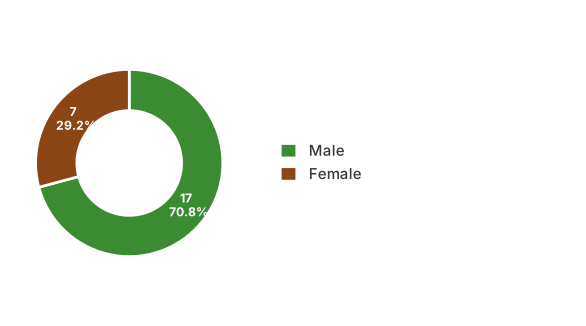
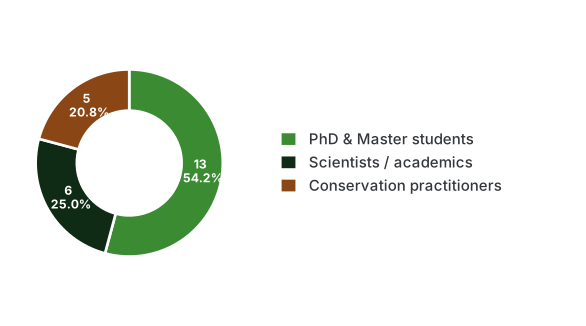
Men made up the majority of the group, at 17 of 24 trainees. Strengthening the gender balance in future recruitment is one of the clearest priorities to emerge from the programme. By professional background, PhD and Master students formed the largest group, alongside scientists, academics, and conservation practitioners.

Donut chart of gender distribution: 17 male trainees (70.8 per cent) and 7 female trainees (29.2 per cent).
Gender distribution; labels show count and share.
Donut chart of professional profiles: 13 PhD and Master students (54.2 per cent), 6 scientists or academics (25.0 per cent), 5 conservation practitioners (20.8 per cent).
Professional profile; labels show count and share.

Repeat Participation

Most trainees came back

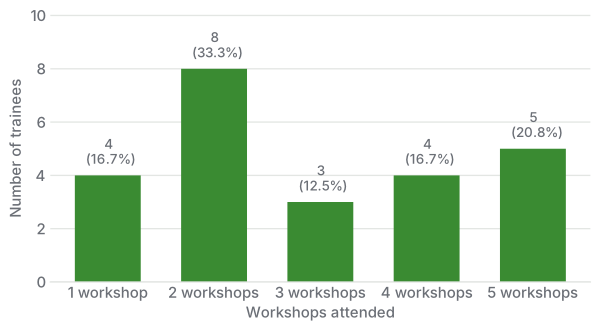
Participation was highly recurrent: 20 of 24 trainees — 83.3 per cent — attended at least two workshops, and on average each trainee attended 2.9 of the five sessions. Five trainees took part in every single one.

That continuity is what distinguishes the programme from isolated training events. Returning participants arrive with their own data and unfinished manuscripts, pick up where the previous session left off, and increasingly support newer trainees themselves.

Bar chart of workshops attended per trainee: 4 trainees attended one workshop, 8 attended two, 3 attended three, 4 attended four, and 5 attended all five.
Number of workshops attended per trainee.

Voices From The Programme

What participants say

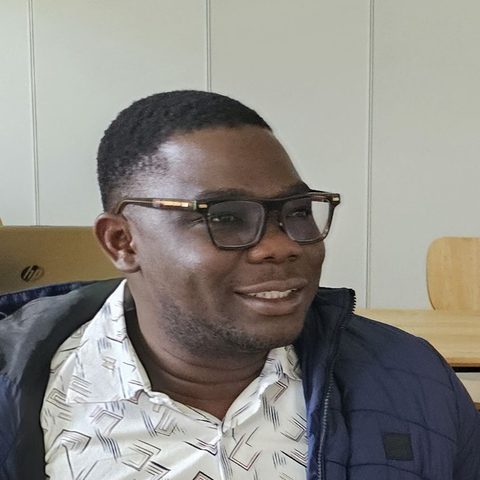
Participating in the training workshops organized by the APES Team and SGA was a transformative experience that greatly enriched my scientific and professional journey as an early-career conservation biologist. The training equipped me with valuable knowledge, practical skills in biodiversity data analysis, and an exceptional network of researchers and conservation practitioners from across the globe. These workshops not only strengthened my research and conservation planning skills but also fostered collaborations that have already resulted in three co-authored scientific publications in international peer-reviewed journals, with one additional manuscript under review and two others in preparation. The knowledge and analytical approaches I gained significantly enhanced my PhD research and continue to guide my work on wildlife monitoring and biodiversity conservation in Togo. I am deeply grateful to the Ape Institute for investing in the next generation of scientists and conservation leaders working to conserve great apes across their range.
Delagnon Assou Delagnon Assou Togo
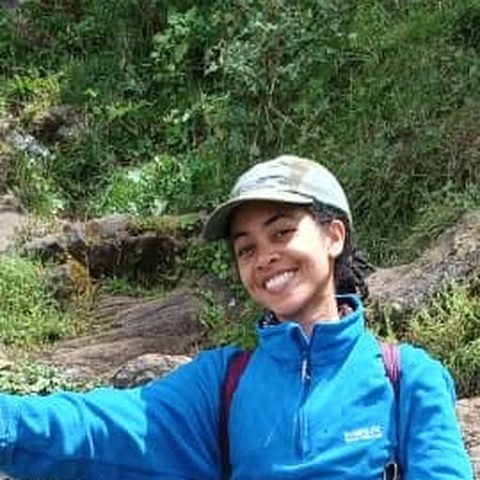
Attending three 2025 workshops in Rwanda was a deeply rewarding experience for my conservation career. The workshops bridged a critical gap by connecting young researchers directly with international great ape experts, an invaluable opportunity that would be difficult to access independently. During these sessions, I learned to use data managed by the IUCN SSC PSG Section on Great Apes (SGA) for various research projects and received hands-on supervision from the experts. This collaborative cohort environment helped me sharpen both my data analysis and scientific writing skills. I believe the Ape Institute sets an important milestone by combining peer collaboration with essential practical training to help us produce scientific papers. Moving forward, I hope future workshops continue to foster these vital Africa–Asia collaborations.
Cristiar Samosir Cristiar Samosir Indonesia
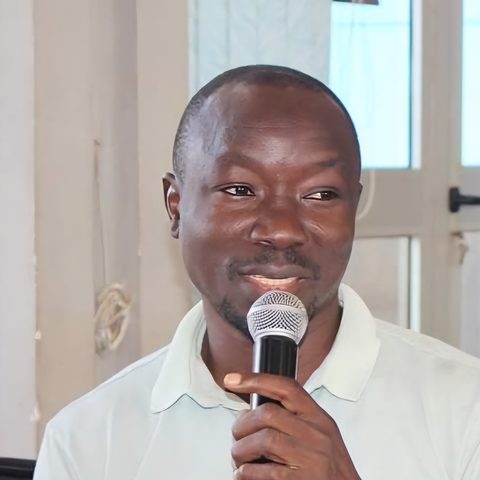
The various workshops I have undertaken in both Côte d'Ivoire and Rwanda have enabled me to develop in a number of ways. I have strengthened my analytical and writing skills in a scientific context, which allows me to be more effective in my professional life as conservation practitioner. I discovered Rwanda and met colleagues from various African, European and Asian countries. This mix of cultures and skills is a real asset to my professional development as it opens up more opportunities. I am truly grateful to have been able to enjoy these experiences with the APES Team and the SGA.
Diorne Zausa Diorne Zausa Côte d'Ivoire
Participating in the APES Team and SGA workshops between 2022 and 2025 was a transformative experience in my academic and professional journey. The training strengthened my skills in wildlife data analysis using R, spatial ecology, and scientific writing, which directly enhanced the quality of my PhD research on climate change, vegetation dynamics, and ecosystem resilience in West African drylands. The knowledge, mentorship, and collaborative network I gained contributed to my research productivity, scientific publications, and successful PhD completion. Beyond academia, these workshops have shaped my career in conservation by equipping me with advanced analytical skills and fostering collaborations that continue to support my work in biodiversity conservation, remote sensing, and climate science.
Razak Kiribou Razak Kiribou Burkina Faso
Participating in the Ape Institute training program was an enriching experience that allowed me to strengthen my conservation skills. The knowledge I gained continues to be useful in my current role. I also had the opportunity to meet various researchers and conservation professionals from diverse backgrounds and learn alongside them. I am grateful for this opportunity and the impact it has on my career.
Solange Kamga Solange Kamga Cameroon

Publications

Papers that came out of the workshops

Manuscripts started during the sessions have gone on to appear in international peer-reviewed journals, with further papers in preparation.

  1. Kiribou, R., Tehoda, P., Chukwu, O., Bempah, G., Kuehl, H. S., Ferreira, J., … & Heinicke, S. (2024). Exposure of African ape sites to climate change impacts. PLOS Climate, 3(2), e0000345.
  2. Tuyisingize, D., Kulik, L., Assou, D., Zausa, D., Kamga, S., Mundi, O., … & Kühl, H. S. (2025). Complex variation in afrotropical mammal communities with human impact. Ecology and Evolution, 15(5), e71331.
  3. Kazaba, P. K., Kulik, L., Beukou Choumbou, G. B., Douhin Tiémoko, C. B., Oni, F. L., Kamgang, S. A., … & van Der Hoek, Y. (2025). Chimpanzees (Pan troglodytes) indicate mammalian abundance across broad spatial scales. Ecology and Evolution, 15(3), e71000.
  4. Assou, D. et al. (in prep.). Threats and conservation efforts in great ape sites: a global synthesis from the APES Atlas.
  5. Heinicke, S. et al. (in prep.). Remote responsibility and intercontinental conservation synergies for African primates and wintering Afro-Palearctic migratory birds.

What We Take Forward

Lessons for future training

The experience of the past three years points to four priorities for the next phase of the programme.

  • Establish a simple, low-cost follow-up system so that alumni continue to receive support after a workshop ends.
  • Strengthen gender-balanced recruitment by setting outreach targets and partnering with networks of women scientists and conservation practitioners.
  • Maintain regional diversity while actively identifying under-represented great ape range countries for future recruitment.
  • Build a step-by-step training structure: introductory online modules, intermediate sessions on data analysis and writing, and advanced on-site workshops for trainees with strong follow-up potential.